Category: Macau Business

  • Macau raises the stakes

    Table minimums have risen in Macau. That’s the most noticeable change during a two week visit, covering Global Gaming Expo (G2E) Asia for Macau Business and Asia Times and surveying casino floors.

    At most large casinos, it’s virtually impossible to find a HK$100 (US$13) table for baccarat, Macau’s favorite game, or blackjack. Minimums run HK$300 and up in most cases, with HK$1,000 and HK$2,000 tables quite prominent. Baccarat players looking for lower stakes are being pushed to electronic gaming terminals with live or video dealers. Or they can choose roulette or dice tables (sic bo or craps), where at most venues they can still toss a HK$50 or even HK$25 bet on a number, though the main plays are least HK$100.

    The higher minimum trend prevails in both downtown Macau (aka the peninsula) and on the Cotai Strip. Some of the smaller joints on the peninsula have proportionally more HK$100 play, strictly as a function of having fewer tables. Grand Lisboa has a string of HK$100 tables that also accept Macau patacas (MOP) in one section of its ground level, near the escalators leading to the main gaming floor.

    Higher table limits are one factor in the rise of what’s being called the premium mass market in Macau. These are high spending players below the VIP level, and this segment came to the fore as VIP play stagnated during the past year, before staging a recovery in recent months. In March, monthly gross gaming revenue reached MOP31.3 billion (US$3.9 billion), its first month topping MOP30 billion. A MOP40 billion month (see page 60) is on the horizon, though still a ways away.

    Premium mass market and VIP play are both crucial to gaming revenue, but premium mass is more appealing to casino operators for a number of reasons, so they’ll keep focused on it, no matter what happens with VIP play. Watch Macau Business for my upcoming article on this key market segment.

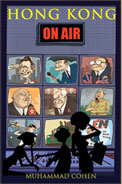
    Totally globalized native New Yorker and former broadcast news producer Muhammad Cohen is author of Hong Kong On Air, a novel set in his adopted hometown during the 1997 handover about television news, love, betrayal, high finance, and cheap lingerie. See his bio, online archive and more at www.muhammadcohen.com; follow him on Facebook and Twitter @MuhammadCohen.

  • Signs of getting it right in Macau

    Club Cubic was heaving at 1.30am on the last Thursday night in November. Nearly 3,000 of the Pearl River Delta’s most beautiful people gathered on the second level of the City of Dreams resort, a space that in the past has often felt as desolate and forbidding as a New York City subway station during the wee hours. On that night, Psy, the Korean rapper behind the mega-hit Gangnam Style, was in town and Club Cubic was the place to be. Sometime past 2am, Psy took the stage, gave the crowd his song and his horse dance and galloped off, but the party continued. It was a night to remember in Macau.

    During a ten day visit culminating with the late night Psy-ting, there were clear signs that Macau is creating more nights to remember for visitors from China’s growing middle class that are presently driving casinos revenue growth. For more than a year, expansion of mass market gaming has outstripped VIP growth.

    According to participants at last month’s Asian Gaming and Hospitality’s Congress, mass market growth reflects Macau and mainland authorities’ push to diversify the economy away from gambling toward broader tourism and leisure activities, as I wrote in the December issue of Macau Business. Junket business insiders at the conference also offered examples of Beijing’s efforts to curtail VIP play. Whatever the reason, mass market spending is rising in Macau.

    On this visit, it seemed Macau’s casinos resorts had sharpened their game as tourist destinations, getting things right more often than has been their custom. Maybe it was my imagination due to spending hours on massage tables and in whirlpools to research an article on luxury spas for the January edition of Macau Business, and enjoying five-star hospitality at their host hotels. Maybe it’s because resorts that needed to learn have had great examples to follow, such as the intelligent, comfortable room design and equipment at Grand Lisboa and the right resort elements for Asia at Galaxy Macau. But mostly, it may be that resorts, especially the ones in Cotai with huge footprints, need to have more traffic and paying customers to function and feel right. As mass market tourism grows, and more people shop, eat and play in plain sight rather than behind VIP room walls, it’s happening.

    Now Macau needs to take the next step and give tourists who come for a good time reasons to stay for more than a day and keep coming back. Sure, gambling will continue to be part of the mix, but there needs to be more. Psy’s appearance underlined the thirst for entertainment. The Pearl River Delta is looking for a good time, and Macau seems finally to have figured out how to deliver one. Now let the good times roll.

    Totally globalized native New Yorker and former broadcast news producer Muhammad Cohen is author of Hong Kong On Air, a novel set in his adopted hometown during the 1997 handover about television news, love, betrayal, high finance, and cheap lingerie. See his bio, online archive and more at www.muhammadcohen.com; follow him on Facebook and Twitter @MuhammadCohen.

  • Macau casino revenue numbers hide real news

    Over the past few months, Macau casino revenues have disappointed. October’s new revenue record of MOP27.7 billion (US$3.46 billion), while welcome, represented a modest 3.2 percent increase over revenue a year ago. But behind the numbers, key changes are taking place that will transform Macau.

    After years of increasing domination by VIP players provided by junket operators, for about a year mass market gamblers have been driving revenue growth. As I wrote in the October issue of Macau Business, the trend will show its biggest impact beyond the casino floor.

    A related trend is the swing toward Cotai, covered in the July issue of Macau Business. Three casino operators already have resorts in Cotai, the entertainment area built on landfill between Macau’s outer islands, and this year the government has approved development applications from the other three. By the end of 2017, there will be at least six new developments in Cotai, built for some US$15 billion.

    Things will surely be different by then. But Macau’s shakeup has already begun, with its effect felt as far away as Beijing and Wall Street.

    Totally globalized native New Yorker and former broadcast news producer Muhammad Cohen is author of Hong Kong On Air, a novel set in his adopted hometown during the 1997 handover about television news, love, betrayal, high finance, and cheap lingerie. See his bio, online archive and more at www.muhammadcohen.com; follow him on Facebook and Twitter @MuhammadCohen.

  • Sands Cotai opens in falling Macau tide

    The world’s biggest Sheraton hotel opened at Sands Cotai Central last week, part of the Macau resort’s second phase that includes a South Pacific themed casino and dozens more retail shops. I covered the phase one opening in April, including an up close and personal encounter with Sheldon Adelson, the chairman of Sands China and its parent company, Las Vegas Sands.

    I’ll be writing more about Sands Cotai Central (SCC) for Asia Times and about Macau casino trends for Macau Business magazine in the weeks ahead.

    Until then, consider that SCC has opened into the teeth of a rare run of slowing casino revenue growth in Macau. The situation resembles conditions facing the 2009 opening of City of Dreams, SCC’s neighbor on the east side of Cotai’s main boulevard, across the Venetian Macao.

    In 2009, the main problem was restricted visas for mainland travelers. In the three years since, Macau has become even more dependent on mainland visitors, and now it’s seeing slowing growth in step with China’s decelerating economy. For better or worse, analysts see Macau resorts becoming more closely tied to the mainland economy in the years ahead. Rather than spreading their bets, it seems Macau’s casinos have doubled down on the mainland.

    Totally globalized native New Yorker and former broadcast news producer Muhammad Cohen is author of Hong Kong On Air, a novel set in his adopted hometown during the 1997 handover about television news, love, betrayal, high finance, and cheap lingerie. See his bio, online archive and more at www.muhammadcohen.com; follow him on Facebook and Twitter @MuhammadCohen.